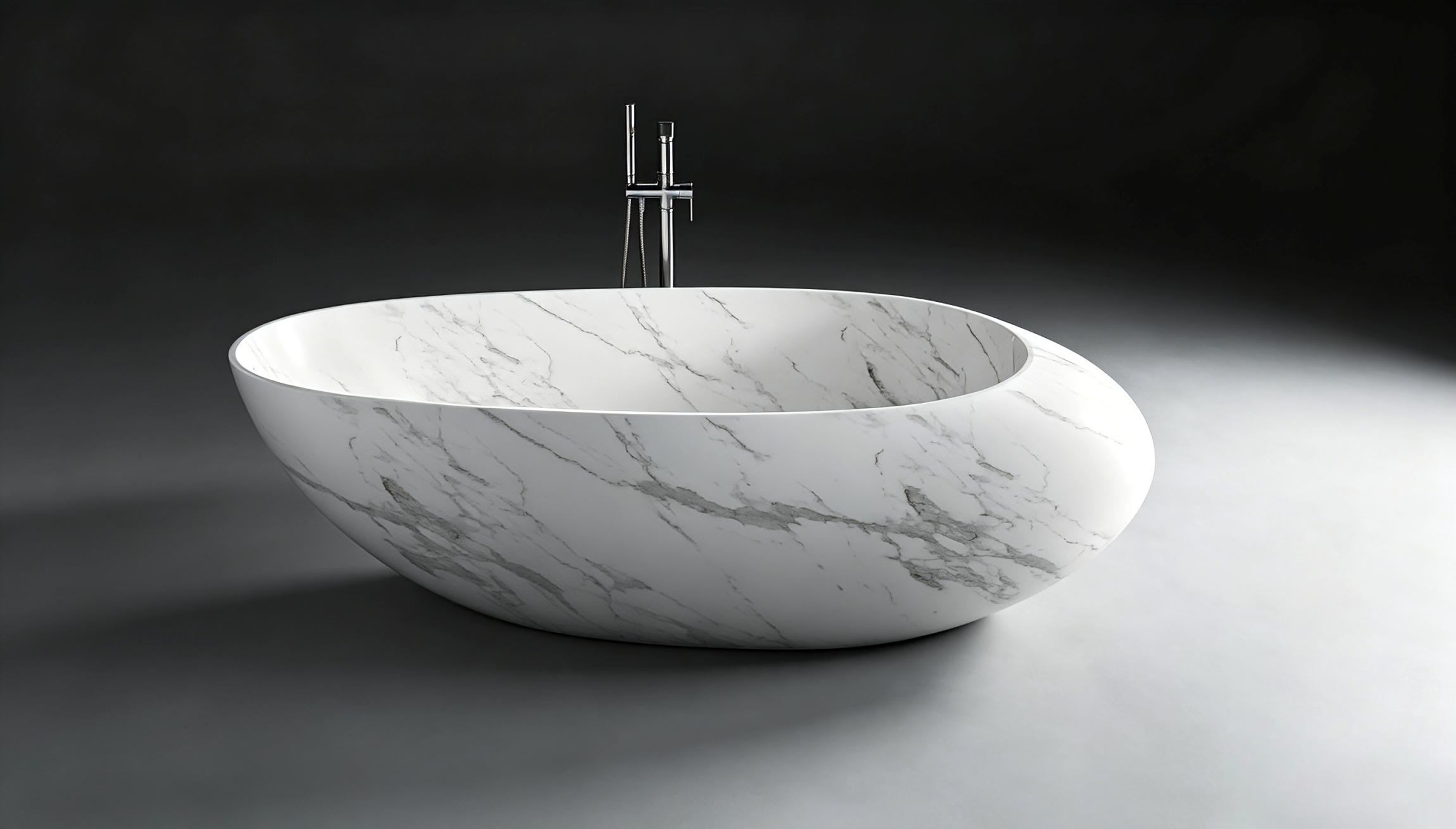
In modern luxury hospitality and high-end residential architecture, selecting the right sanitary ware is a critical decision that balances aesthetic elegance, structural safety, and long-term durability. While natural marble offers timeless beauty, its immense weight, vulnerability to chemical staining, and porosity present significant engineering challenges. On the other hand, traditional acrylic fixtures often fail to convey the tactile weight and substance demanded by premium commercial spaces.
Solid surface resin stone bathtubs have emerged as the definitive benchmark for luxury architectural specification. Composed of high-purity Aluminum Trihydrate (ATH) bound with premium grade polymer resin and organic pigments, solid surface delivers seamless stone aesthetics alongside engineered non-porous performance. This guide provides architects, interior designers, and MEP engineers with a complete technical framework for specifying, procuring, and installing solid surface bathtubs in commercial and residential projects worldwide.
1. Material Science & Technical Performance Comparison
Solid surface resin stone is a homogeneous, non-porous composite engineered to outperform traditional materials across key structural and maintenance metrics.
Key Material Attributes
- Non-Porous Surface: With a water absorption rate under 0.05%, solid surface inherently prevents biological growth, mildew, and deep chemical staining from hair dyes, essential oils, or bath salts.
- Thermal Insulation: Possessing superior heat retention compared to cast iron or natural stone, solid surface maintains water temperature longer, enhancing the user experience while reducing energy expenditure in commercial spa facilities.
- Structural Homogeneity: Color and material composition are uniform throughout the entire thickness of the bathtub, enabling 100% field-repairability against minor scratches or chips.
Material Comparison Matrix
| Performance Metric | Engineered Solid Surface | Natural Marble | Cast Iron | Standard Acrylic |
|---|---|---|---|---|
| Average Dry Weight (1700mm) | 130 kg – 160 kg | 350 kg – 600 kg+ | 180 kg – 220 kg | 35 kg – 50 kg |
| Water Absorption Rate | < 0.05% (Impermeable) | 0.2% – 0.5% (Porous) | 0.00% | < 0.2% |
| Stain & Chemical Resistance | High (Resistant to acids/oils) | Low (Etches easily) | High (Enamel layer) | Moderate (Prone to scratching) |
| Surface Repairability | 100% Sandable / Renewable | Extremely Difficult | Requires Re-enameling | Limited / Temporary |
| Design Flexibility / Custom Molds | Unlimited (Custom Molds) | Restricted by Slab Size | Fixed Standard Molds | Thermoformed Shapes Only |
2. Customization & Aesthetic Engineering
Commercial architectural projects increasingly require custom finishes and bespoke dimensions to align with specific design languages. Solid surface technology allows for seamless aesthetic integration across diverse interior environments.
Integrated Marble Textures
Through advanced liquid resin casting techniques, engineered solid surface tubs can seamlessly incorporate luxury stone textures throughout the material. Popular specifications include:
- Calacatta Gold: Warm gold and grey veining over a soft off-white base.
- Rojo Alicante / Viola: Deep burgundy and wine-red undertones with dramatic white quartz veining.
- Nero Marquina: Dense black matrix with fine white linear veining.
Surface Finish Options
- Matte Finish (Ra 0.4μm): The architectural standard for contemporary spaces, providing a soft velvet-touch feel and enhanced slip resistance.
- High-Gloss Finish: Polished to a high sheen, reflecting light in boutique hotel suites and traditional luxury interiors.
3. Pre-Installation & Load-Bearing Calculations
Correct structural and plumbing planning ensures effortless field integration and prevents structural deflection in multi-story developments.
Floor Load-Bearing Calculation Formula
To calculate the minimum floor structural load required for a solid surface bathtub installation, use the following engineering formula:
Total Operating Weight (kg) = Bathtub Dry Weight + Water Capacity (L) + Bather Weight (80 kg)
Design Load (kg/m²) = Total Operating Weight / Floor Contact Footprint Area (m²)
Example Calculation: For a 1600mm tub weighing 140 kg dry, holding 250 liters of water, with one bather (80 kg): Total Weight = 470 kg. Distributed over a base footprint of 1.2 m², the minimum structural loading capacity required is 391.6 kg/m².
Plumbing & Drainage Pre-specifications
- Drainage Location: Ensure the subfloor waste pipe center aligns within ±5mm of the bathtub drain outlet drawing.
- Overflow Integration: Integrated slot overflows or pop-up waste assemblies must comply with regional standards (cUPC for North America, CE for Europe).
- Subfloor Clearance: Specify an under-tub recess or raised subfloor channel of at least 100mm to accommodate P-trap clearance and flexible plumbing lines.
4. Step-by-Step Site Installation SOP
Adhering to a standardized installation sequence protects the product surface and guarantees watertight operation.
- Uncrating & Inspection: Carefully dismantle the protective plywood crate. Inspect the unit under site lighting for any shipping damage prior to movement into the bathroom envelope.
- Subfloor Preparation: Verify that the finished floor is perfectly level within 2mm across the entire length using a laser level or spirit level. Apply self-leveling compound if necessary.
- Dry Fitting & Plumbing Alignment: Lower the bathtub into position using soft lifting straps. Align the brass pop-up waste assembly with the subfloor P-trap. Perform a dry check for clearance.
- Final Sealing & Drainage Connection: Apply high-grade neutral cure anti-fungal silicone adhesive around the bottom perimeter footprint. Connect the flexible waste pipe, secure the pop-up drain, and fill the bathtub with water to test for leaks over a 24-hour static pressure test.
- Protection During Fit-Out: Cover the installed tub with heavy-duty corrugated board or protective neoprene covers until handover to prevent damage from secondary trades.
5. Maintenance & On-Site Surface Repairability
One of the primary commercial advantages of solid surface resin stone is its ease of long-term facility maintenance.
- Daily Care: Clean using a soft microfiber cloth and neutral pH liquid detergent. Avoid abrasive scouring pads or strong acidic solvents.
- Scratch Repair Protocol: For light surface scratches or minor stains, sand the affected area in a circular motion using 800-grit wet/dry sandpaper, progressing to 1200-grit and 2000-grit for matte finishes. Buff with a fine polishing compound to restore the original factory sheen.
6. B2B Sourcing, Logistics & Compliance
Procuring solid surface fixtures for overseas hospitality or residential developments requires attention to packaging standards and lead-time planning.
- Molding & Prototyping Lead Time: Custom mold creation typically requires 15–20 days, with 3D CAD drawing sign-off required prior to production.
- International Shipping Packaging: Tubs should be encapsulated in 360-degree high-density EPE foam and enclosed in ISPM-15 compliant fumigated plywood crates suitable for ocean freight.
- Global Regulatory Compliance: Ensure factory certifications include CE, cUPC, and ISO9001 quality management standards to facilitate seamless customs clearance and job-site inspections.
Architectural & Engineering Support: Need technical CAD files, 3D BIM/Revit models, or custom mold quotes for your upcoming hospitality or luxury residential project? Contact our engineering team or request a physical material sample kit today.